
Replacement windows can make an opening look smaller even when the wall opening never changes. The reason is simple: every layer of frame between the wall and the glass consumes part of the view.
This is most noticeable when a retrofit window is installed inside an existing frame. The old frame stays in place, the new frame fits inside it, and the new sash fits inside the new frame. The homeowner receives a new window, but the amount of visible glass may decrease.
That does not make retrofit installation a bad method. It makes frame profile and installation design important parts of the purchase.
What Is Visible Glass Area
Visible glass area is the portion of glass you can actually see after the window is installed. It differs from rough opening size, frame size, and insulated-glass-unit size because portions of the glass extend into the sash and glazing pocket.
The distance from the outside edge of the frame to the visible glass is often called the sightline. Wider frames, thicker sashes, deeper glazing beads, and large meeting rails increase that sightline and reduce the view.
Why Retrofit Windows Commonly Lose Glass
In many Arizona stucco homes, the original aluminum frame is left in the wall. The old sashes and glass are removed, and the replacement frame is installed inside the remaining frame. An exterior flush-fin or trim profile covers the transition.
This method can preserve stucco, reduce disruption, and avoid opening the wall. Its tradeoff is that the new unit must fit within the old frame rather than occupying the entire original rough opening.
If the old frame removes an inch and the new frame and sash remove additional space, the difference can be visible, particularly on small windows.
Why Small Windows Show the Difference More
A two-inch reduction matters more proportionally on a narrow bathroom window than on a large living-room picture window. The same frame profile that looks balanced around a six-foot opening can feel heavy around a two-foot opening.
Operating windows also contain more structure than fixed windows. A slider needs tracks, interlocks, rollers, sash members, and a meeting rail. A single-hung window needs balances, jamb channels, a meeting rail, and an operable sash. A picture window has no moving sash and can devote more of the opening to glass.
Frame Profile Matters
Two windows with identical exterior dimensions can provide different visible glass because their frames and sashes are shaped differently. A narrow-profile window preserves more view. A bulkier profile may be designed around other priorities such as structural strength, multiple chambers, hardware, reinforcement, or manufacturing platform.
The correct comparison is not simply frame thickness at one exposed edge. Ask for the daylight opening or visible glass dimensions of the exact size and configuration being quoted.
Meeting Rails Can Change the View
The center meeting rail is often the most visually obvious part of a slider or single-hung window. Reinforcement, locks, interlocking profiles, and structural requirements can make this section wider than the surrounding sash.
On an XOX slider, there may be two meeting rails. On a small opening, those vertical members can occupy a meaningful portion of the view. A different configuration, such as XO or OX, may simplify the sightline if ventilation and room layout allow it.
Retrofit Versus Full Tear Out
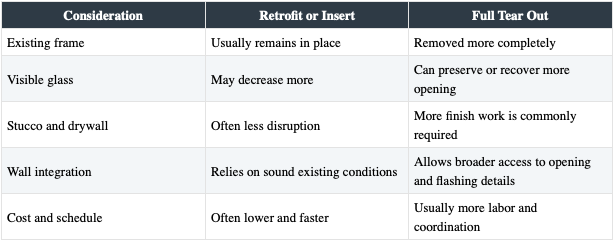
A full tear-out can reclaim more of the original opening because the new window is installed closer to the rough opening. It may also permit improved flashing and inspection of concealed conditions. The tradeoff is additional labor, stucco or siding work, drywall or trim work, paint, dust, and cost.
The best method depends on the condition of the original frame, wall construction, water-management needs, desired sightline, and budget. Preserving one extra inch of glass does not automatically justify demolishing a perfectly sound stucco return, but it may matter greatly on a small or architecturally important opening.
Will the Room Become Noticeably Darker
Sometimes, but not always. The effect depends on how much glass is lost, the number and direction of windows, wall color, exterior shading, glass visible transmittance, and room depth.
A small reduction around one large, bright picture window may be barely noticeable. Replacing several narrow shaded windows with bulky frames and darker glass can produce a more obvious change.
Frame color also changes perception. Black frames create a strong outline and may appear heavier even when their physical dimensions match a white frame. That can be an intentional design feature, but homeowners should see realistic samples rather than choosing from a one-inch color chip.
How to Compare Before You Buy
1. Ask for the exact frame size and visible glass or daylight opening dimensions.
2. Compare cross-section samples from the actual product series.
3. Confirm whether the proposal uses retrofit, block-frame, nail-fin, or another installation method.
4. Evaluate small windows separately because proportional glass loss is greater.
5. Review meeting-rail width and configuration on sliders and hung windows.
6. Compare the visible transmittance and appearance of the selected glass.
7. For bedroom windows, verify that the reduced opening will not create an egress problem.
8. If possible, view completed installations from inside the home rather than relying only on showroom samples.
When a Narrower Profile Is Worth Prioritizing
Slim sightlines are especially valuable when the home has narrow openings, important views, contemporary architecture, multiple meeting rails, limited daylight, or an existing window that barely satisfies a clear-opening requirement.
They may matter less when the opening is very large, heavily shaded, already divided by grids, or when structural and product requirements limit the available designs.
Final Thoughts
Replacement windows should be compared by more than color, warranty, and energy ratings. The amount of glass left after installation directly affects the view, daylight, appearance, and sometimes emergency opening size.
Modern Resolution Windows and Doors helps Arizona homeowners compare frame profiles, operating styles, and installation methods before the windows are ordered. Call or text 480-665-5732 to schedule a free consultation.
